Kashmir’s finest saffron,
weighed for professional kitchens.
weighed for professional kitchens.
Grade I Mongra from the karewa fields of Pampore — sold only to chefs, in 10 to 100 gram tins. No retail jars. No middlemen.
PAMPORE, KASHMIR
GRADE I MONGRA
ISO 3632 CATEGORY I
BATCH COA WITH EVERY TIN
01 · THE SAFFRON
Only the deep-red tip of the stigma
Every strand is hand-separated at the tip — the mongra cut — where crocin, picrocrocin and safranal concentrate. No yellow style, no laccha blends, no powder. What reaches your kitchen is the part of the flower that actually cooks.
Deeper colour in every dish
Stronger, longer-lasting aroma
More potency in just 2–3 strands
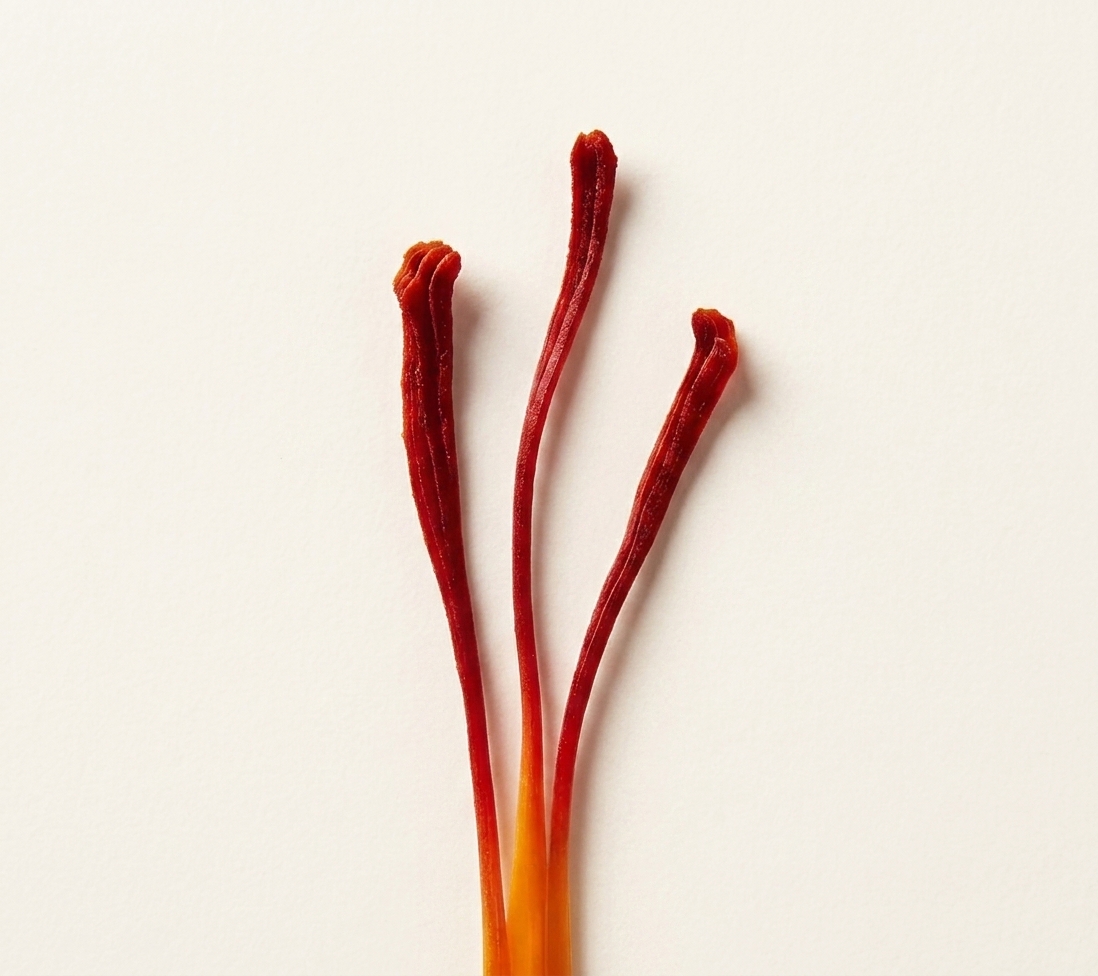
the stigma, cut by cut — only the mongra tip makes the tin
02 · QUALITY, MEASURED
Chefs don’t buy adjectives.
They buy lab numbers.
They buy lab numbers.
Every lot is tested to ISO 3632 and ships with its certificate of analysis. These are our current-harvest floors — not averages.
250+
CROCIN · COLOUR
Colouring strength at 440 nm. ISO Category I begins at 190; we reject below 250.
85+
PICROCROCIN · FLAVOUR
The bitter backbone that carries through rice, stocks and cream. Category I floor is 70.
30–45
SAFRANAL · AROMA
Held inside the ISO 20–50 band — fragrant, never perfumed or flat.
≤8%
MOISTURE
Dried the day of harvest and sealed — full weight in saffron, not water.
03 · KASHMIR, AGAINST THE USUAL
Most saffron in American kitchens is Iranian or Afghan.
Kashmir is a different spice.
Kashmir is a different spice.
Iran grows roughly nine-tenths of the world’s saffron; Kashmir grows under one percent. Grown at altitude on the karewa plateaus and cut to the mongra tip, it trades volume for depth — and it shows on the plate.
TYPICAL US SUPPLY
IRANIAN SARGOL / AFGHAN NEGIN
IRANIAN SARGOL / AFGHAN NEGIN
hef’sgram
KASHMIR GRADE I MONGRA
SHARE OF WORLD CROP
~90% of global production — abundant and broker-traded
Under 1% — one of the rarest origins in the trade, GI-protected since 2020
TERROIR
Semi-arid plains of Khorasan and Herat
Karewa highland plateaus of Pampore at ~1,600 m — cold nights concentrate the crocus
THE STRAND
Finer, shorter threads; machine-graded cuts are common
Visibly thicker, longer strands with the flared mongra head — hand-separated
COLOUR · CROCIN
Category I starts at 190; commercial lots often sit near the floor
We reject below 250 — deeper gold from fewer strands
FLAVOUR & AROMA
Sharper, drier, faster to fade in long cooking
Honeyed, earthy depth that holds through dairy, stocks and rice
CATEGORY I PRICE
Roughly $6–12 per gram at US retail, depending on grade, brand and channel — premium jars run to $12/g
$9.20–11.50 per gram, published on this page — Kashmiri mongra at the price of a good Iranian jar
TRACEABILITY
Multi-broker chains; origin often blended or re-packed en route
Single-origin lots, sealed at source in Pampore, batch COA with every tin
Iranian and Afghan saffron can be excellent — ours is simply a different terroir, cut and scale. Taste them side by side and let the pan decide.
04 · FORMATS
No one-gram jars.
Quantities that make sense on a line.
Quantities that make sense on a line.
We supply professional kitchens only. Every tin is harvest-dated, nitrogen-flushed and sealed in Pampore, with its batch COA inside the lid. Prices are published, in USD — consistently under the $12-per-gram that premium retail jars work out to.
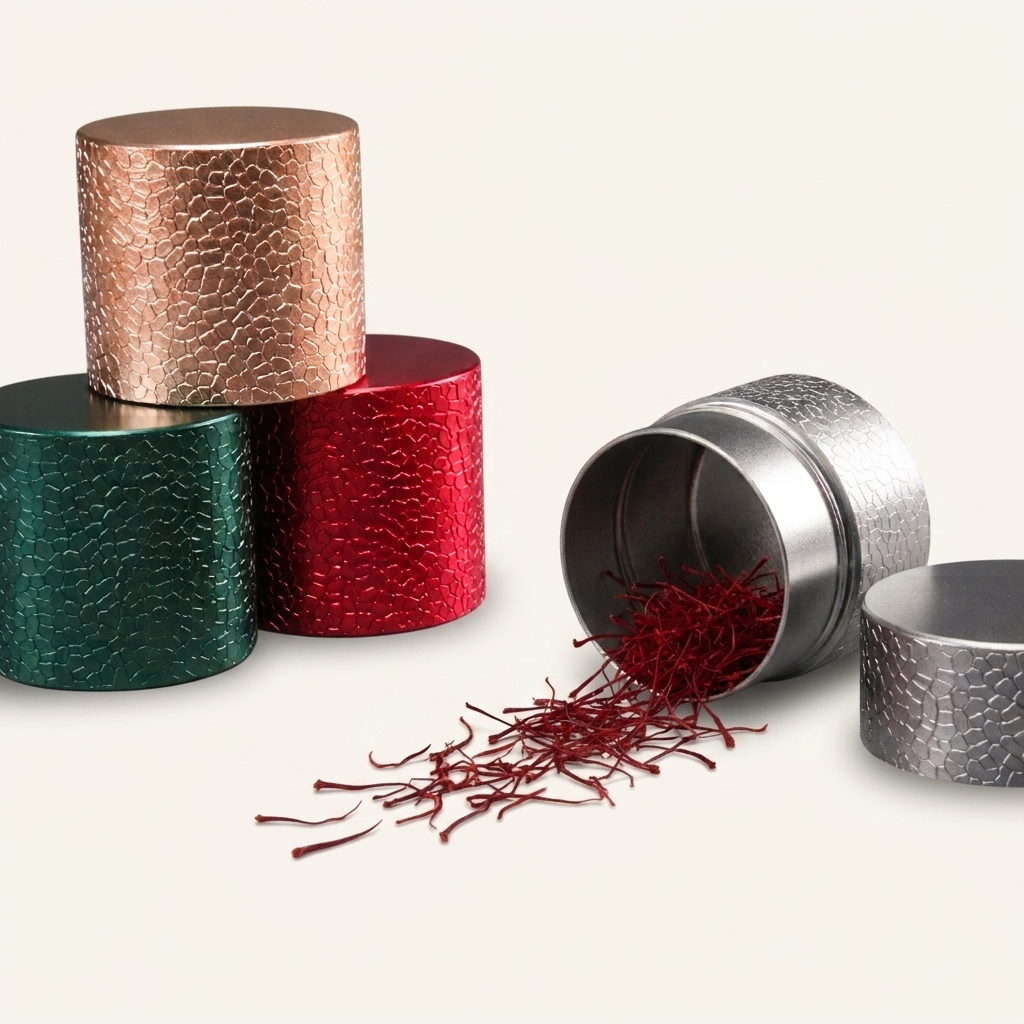
THE TIN
Embossed aluminium, built for the spice shelf of a working kitchen
Light-proof and airtight, nitrogen-flushed at sealing. The wide mouth takes a chef’s spoon; the lid seats by feel, service after service.
10g
THE TRIAL TIN
A first look at the lot before committing. Roughly 4,800 strands.
$115
$11.50 / GRAM
25g
THE TASTING TIN
For menus in development and first orders. Roughly 12,000 strands.
$265
$10.60 / GRAM
MOST KITCHENS
50g
THE WORKING TIN
A service standard — sized for a season of tasting menus. Roughly 24,000 strands.
$495
$9.90 / GRAM
100g
THE VOLUME TIN
Banqueting, patisserie programmes and hotel groups. Larger formats on request.
$920
$9.20 / GRAM
hand-separation in Pampore
05 · FOR KITCHENS
Built to be
the chef’s favourite
the chef’s favourite
01
SAMPLE KIT FIRSTA blind-taste kit for executive chefs — our mongra beside whatever you use today. Cook both; then decide.
02
COA WITH EVERY BATCHISO 3632 report per lot — crocin, picrocrocin, safranal, moisture — ready for your procurement and food-safety files.
03
DIRECT FROM PAMPORESingle-origin lots from partner farms, sealed at source. Standing orders and harvest reservations for groups.
04
TRANSPARENT PRICINGOne published price per tin, in USD, on this page — no quote walls, no negotiation games. Volume terms for groups on request.
06 · FAQ
Questions chefs
ask us first
ask us first
Something we haven’t covered? Write to care@chefsgram.com — a person answers, within two working days.
{{ item.q }}
{{ item.symbol }}
{{ item.a }}
07 · REQUEST A SAMPLE
Taste it against
what you buy now.
what you buy now.
Tell us about your kitchen and we’ll send the tasting kit with the current lot’s COA. Replies within two working days.
HOW TO REQUEST
Send us an email with:
01Your name and role in the kitchen
02Restaurant, hotel or institution, and city
03Rough monthly saffron usage in grams
04What you cook with it today — so we size the kit right
Trade only. We don’t sell to consumers or share your details.